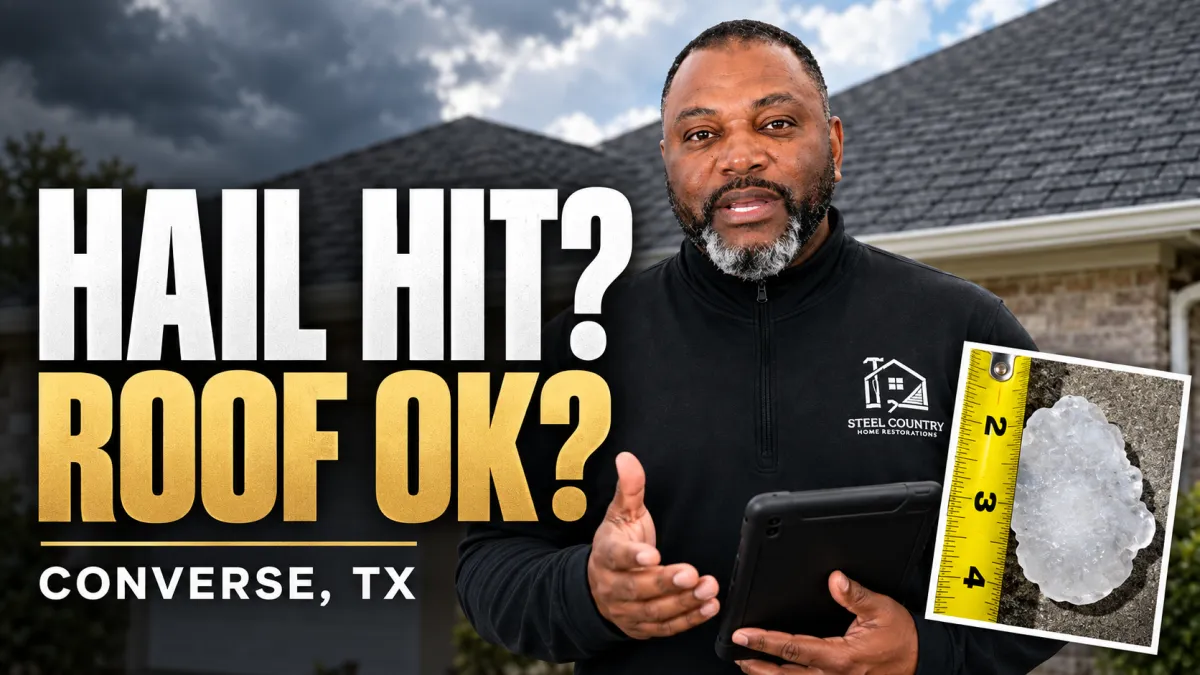
Hail Damage Check: Protect Your Roof in Converse, TX
Hail Damage, Roof Inspection, Home Insurance
Hail Near Converse, Texas: What Homeowners Should Check Before the Next Rain
Severe hailstorms are a reality for homeowners in and around Converse, Texas. Knowing what to look for after a storm—and what to do before the next rain—can protect your roof, your home’s interior, and your insurance claim.
Understanding Hail Size and Why It Matters
In the Converse area, hail can range from pea-sized to golf ball or even baseball-sized during severe storms. As a general guideline:
Pea-size hail (¼ inch) may cause cosmetic wear but can accelerate roof aging over time.
Marble to quarter-size hail (½–1 inch) can bruise shingles and dent softer roofing materials and metal components.
Golf ball-size hail (1¾ inches) and larger often causes visible roof, gutter, siding, and window damage and should always trigger a professional inspection.
How Hail Can Damage Your Roof and Home Exterior
Hail does not always leave obvious holes in a roof. Often, the damage is more subtle but still serious. Common issues include:
Granule loss on asphalt shingles, exposing the underlying mat and shortening the roof’s lifespan.
Bruising or cracking of shingles, which can turn into leaks after the next heavy rain.
Dented metal flashing, vents, gutters, and downspouts, potentially affecting water flow off the roof.
Cracked skylights, damaged window screens, and chipped paint on fascia or siding that may allow moisture intrusion.

Minor hail bruising today can become an active roof leak with the next heavy rainfall.
Safe Inspection Steps After a Hailstorm
Safety should be your first priority. Avoid climbing onto the roof, especially if it is wet, steep, or unfamiliar. Instead, focus on what you can see safely from the ground and inside your home:
Walk the property and look for dents in gutters, downspouts, mailbox, and metal trim—these are easy indicators of hail impact.
Check around windows and doors for cracked glass, damaged screens, or chipped paint and siding.
Inside, inspect ceilings, attic spaces, and upper walls for new water stains, damp insulation, or musty odors indicating moisture intrusion.
⚠️ Safety Note: If you see fallen power lines, broken glass, or structural concerns, keep your distance and contact the appropriate utility or emergency services before approaching.
Why Prompt Assessment Matters for Insurance Claims
Most homeowners insurance policies in Texas require that storm damage be reported within a reasonable time frame. Delaying an assessment can create two problems: worsening leaks that lead to interior damage, and questions from your insurer about when the damage occurred. A prompt inspection helps establish a clear timeline and demonstrates that you acted quickly to protect your property.
The Importance of a Professional Evaluation
Hail damage can be difficult to identify without training. What looks like a harmless scuff may actually be a compromised shingle that will fail under the next heavy rain. A qualified roofing professional familiar with hail events near Converse can:
Perform a full roof-level inspection, including shingles, flashing, vents, and penetrations.
Distinguish between normal wear and storm-related damage that may be covered by insurance.
Provide written findings and photos that support your claim and repair plan.
💡 Professional Tip: Choose an established, insured roofing contractor rather than responding to unsolicited door-to-door offers after a storm.
Documenting Damage Effectively
Thorough documentation strengthens your position with the insurance adjuster. As soon as it is safe:
Take clear, dated photos and videos of any visible damage to roofing, gutters, siding, windows, and outdoor structures.
Photograph interior water stains, damaged belongings, and any temporary protection you install, such as tarps or buckets.
Save receipts for emergency repairs or mitigation efforts; many policies reimburse reasonable expenses to prevent further damage.
Reviewing and Understanding Your Insurance Policy
Before the next storm season near Converse, take time to review your homeowners policy. Pay particular attention to:
Your deductible amount, including whether you have a separate wind or hail deductible based on a percentage of your home’s value.
Whether your roof is covered at replacement cost or actual cash value, which factors in depreciation.
Any exclusions or limitations related to cosmetic damage, older roofs, or lack of maintenance.
If anything is unclear, contact your insurance agent for an explanation in writing. Understanding your coverage now will help you make faster, informed decisions after the next hailstorm.
Preparing Your Home Before the Next Rain
After hail hits near Converse, Texas, do not wait for the next downpour to reveal problems. Conduct a safe preliminary check, arrange a professional roof evaluation if you suspect damage, document everything carefully, and coordinate promptly with your insurance provider. Taking these steps can help protect your home, minimize interior damage, and support a smoother claims process when you need it most.
